KARATINA UNIVERSITY HOSTS INTERNATIONAL CONFERENCE ON HEALTH SCIENCES, TECHNOLOGY AND INNOVATION

Karatina University, through the School of Health Sciences, in collaboration with Mwai Kibaki Referral Hospital, hosted the International Conference on Advances in Health Sciences, Technology and Innovation (ICAHSTI) from 22nd to 24th September 2026, bringing together researchers, healthcare practitioners, scholars, students and other stakeholders to share knowledge and explore solutions to emerging health challenges. The three-day conference held under the theme, “Integrating Conventional and Alternative Health Management Systems for Sustainable Global Health,” provided a platform for knowledge exchange, research dissemination and collaboration across health sciences, technology and healthcare practice. The conference was supported by various partners, including Topchoice Surveillance, Jamii Hospital, Equity Afia, Absa Bank and Co-operative Bank, among others, whose contributions supported the successful delivery of the three-day event

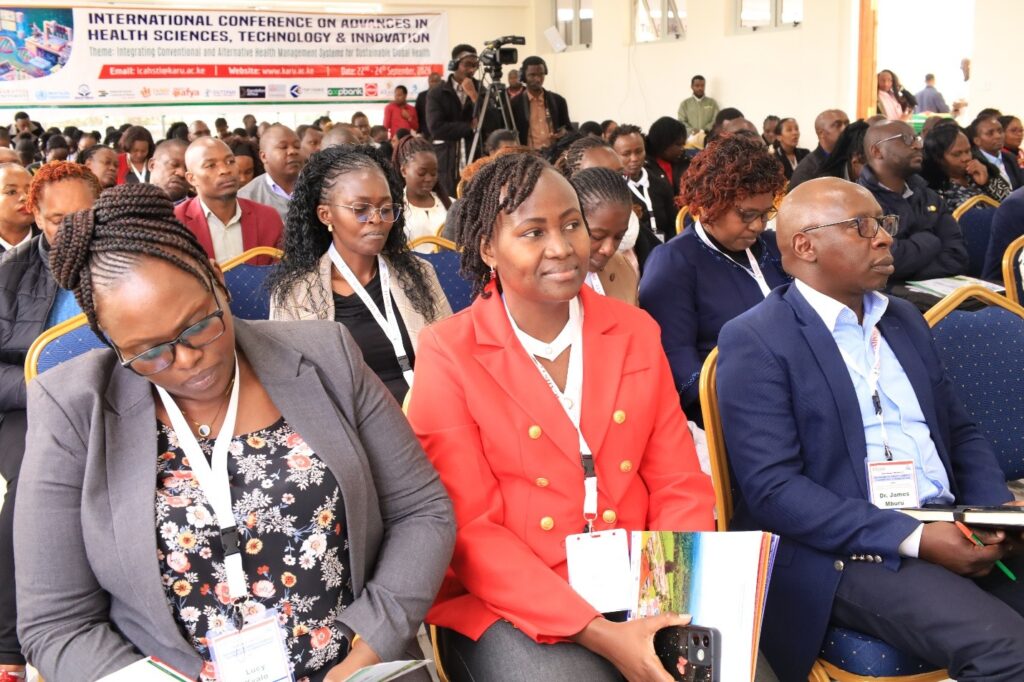
A section of the audience during the conference

The conference attracted local and international experts and participants, including delegates joining virtually from Kenya, Scotland, Italy, Nigeria, Madagascar and beyond. The programme featured keynote addresses, expert presentations, panel discussions, research presentations and breakout sessions covering ten thematic areas: communicable and non-communicable diseases; mental health and neurodegenerative diseases; maternal and neonatal health; integrated health systems and emerging issues; science, technology and healthcare innovation; health information and knowledge management; agriculture, nutrition and health; environment, climate and human health; health education; and health economics.

Dean School of Health Sciences

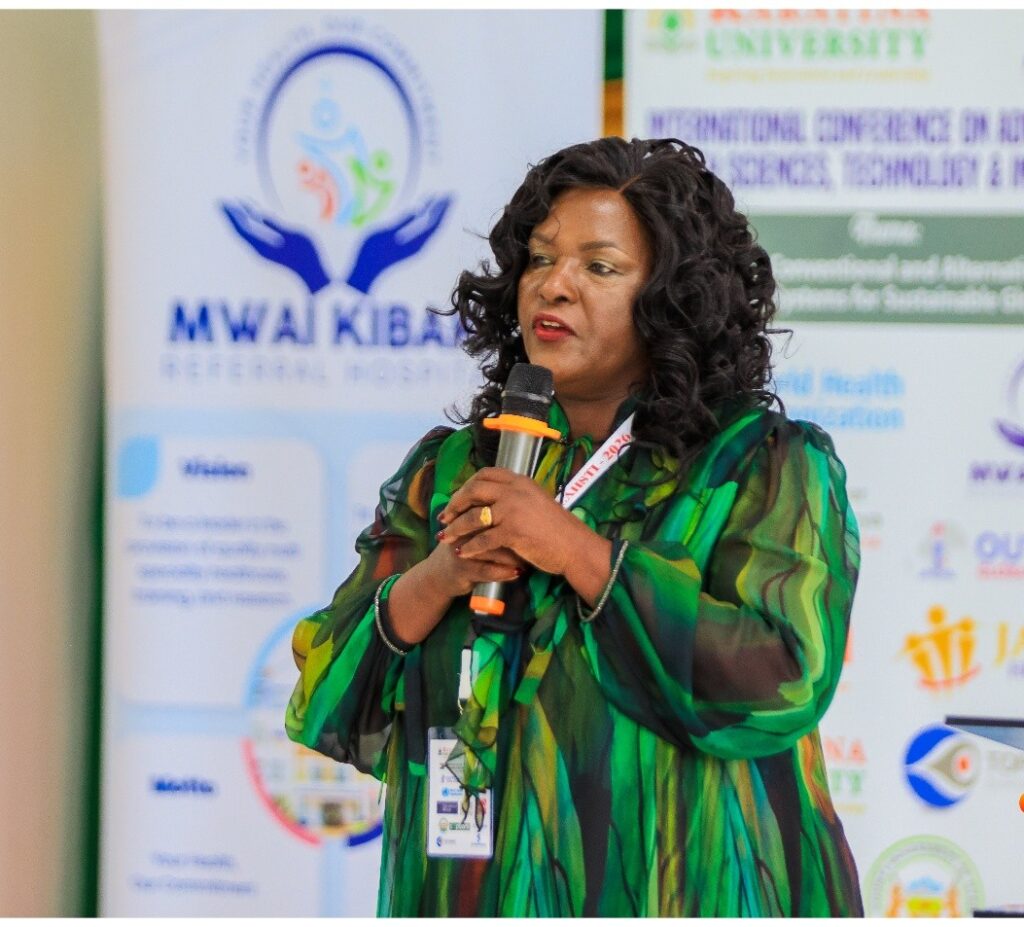
The Dean School of Health Sciences Dr. Beatriec Gichuru addressing the audience

Speaking during the opening ceremony, Dr. Beatrice Gichuru, Dean, School of Health Sciences, appreciated the partners and the university management for the opportunity to host the International Conference. She emphasised that the value of health research should ultimately be measured by its ability to transform lives and respond to the needs of communities.

On the other hand, Prof. Richard Kiai, Deputy Vice Chancellor (Planning, Finance and Administration), highlighted the importance of health and wellbeing to national development. He linked the conference to Sustainable Development Goal 3 on Good Health and Well-being, and called for ethical research and greater knowledge exchange among participants. He also emphasised the need to bridge the gap between conventional and alternative health management systems and encouraged the development of knowledge-sharing platforms to support young researchers in addressing global health challenges.

Speaking in his capacity as Deputy Vice Chancellor (Academic, Research and Student Affairs), Prof. Franklin Wabwoba highlighted Karatina University’s commitment to holistic education that develops the “whole person.” He further emphasised on the importance of collaborative research in bridging the gap between academic knowledge and practical solutions, calling for education and research to translate into tangible impact for society.

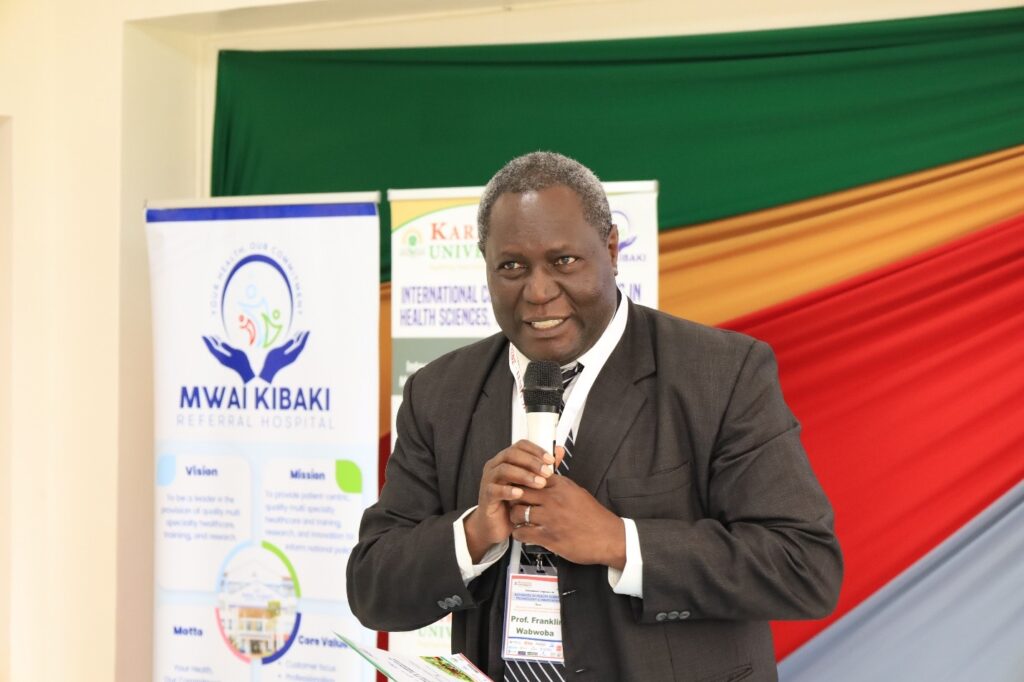
Prof. Franklin Wabwoba the Deputy Vice Chancellor (ARSA) delivering the VCs remarks during the conference.

Delivering the official opening remarks on behalf of the Vice Chancellor, Prof. Linus Gitonga, Prof. Wabwoba emphasised the importance of connecting research, clinical practice and innovation to address health challenges. He noted that the collaboration between Karatina University and Mwai Kibaki Referral Hospital brought together complementary strengths in research and knowledge generation, as well as clinical practice and healthcare delivery.

He encouraged participants to use the conference not only to present research, but also to build connections among researchers, practitioners and industry and identify ideas that can progress from research into practical solutions, products and services. He further called for the conference recommendations and commitment to action to be practical, measurable and sustainable.

Notably the CEO Mwai Kibaki Referral Hospital, Dr. Peter Muiruri, highlighted the importance of collaboration between academic institutions and healthcare facilities in strengthening research and improving clinical practice. The collaboration between the two institutions provided a platform for connecting academic knowledge with the realities of healthcare delivery.

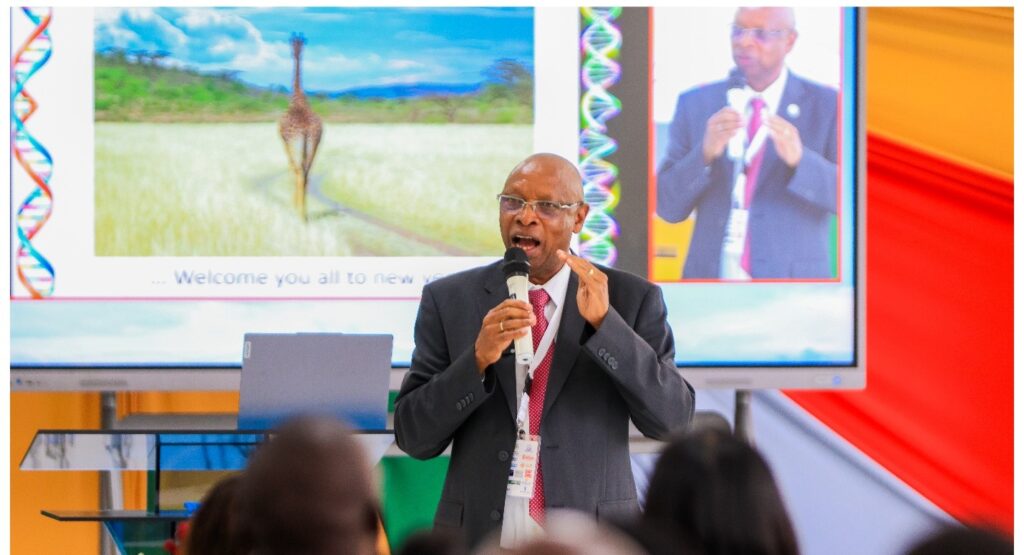
The Chief Guest Prof. George Njoronge delivering the keynote address during the workshop

A key highlight of the opening ceremony was the keynote address by Prof. George Njoroge, Chief Scientific Officer at Kenyatta University Teaching, Referral & Research Hospital (KUTRRH), who spoke on “Promoting and Commercializing Innovation in the Continent of Africa: Discovering New Medicines.”

Drawing from his experience in pharmaceutical research and drug discovery, Prof. Njoroge highlighted the importance of strengthening Africa’s role in the discovery and development of medicines. He called for greater investment in research that responds to African realities, particularly through clinical trials involving local populations. He noted that differences between populations can influence how medicines perform, underscoring the importance of locally relevant research in developing effective healthcare solutions.

He further challenged the participating institutions to strengthen the pathways connecting research, innovation, investment and clinical application, noting that generating knowledge should be accompanied by efforts to translate research into products, services and solutions that can benefit communities.

Throughout the conference, participants presented research and shared insights across the various thematic areas, examining issues affecting health systems and communities and exploring innovative approaches to addressing them. The presentations covered areas including maternal and neonatal health, communicable and non-communicable diseases, cancer prevention and management, mental health and neurodegenerative diseases, digital health, health information management, nutrition, climate and health, health education and healthcare innovation.

The discussions demonstrated the breadth of health research being undertaken and highlighted opportunities for applying evidence, technology and innovation to strengthen healthcare delivery and advance sustainable global health. The conference also provided opportunities for networking, knowledge exchange and engagement with exhibitors and organisations supporting health research and innovation, strengthening connections between academia, healthcare practice and other sectors.
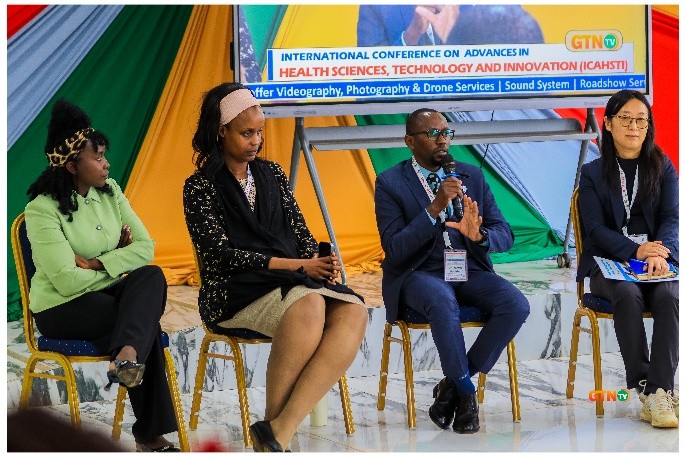
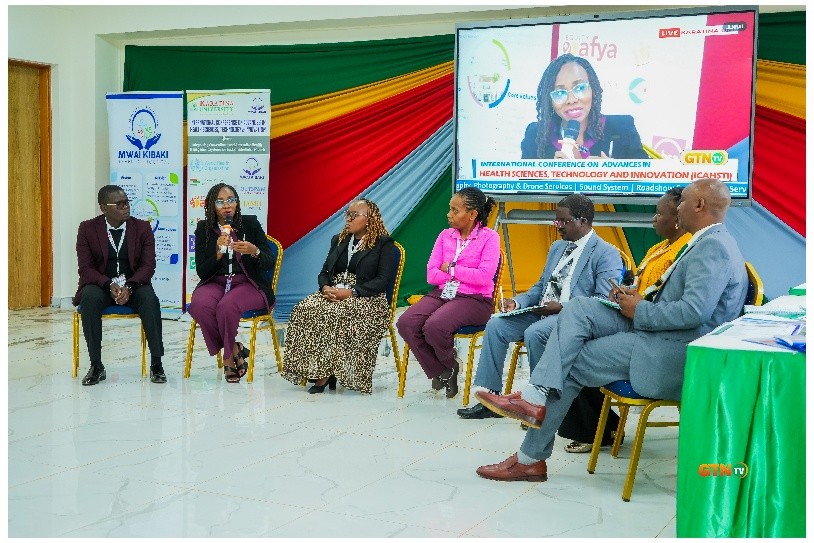
Panel discussion sessions

As the conference concluded, Dr. Beatrice Gichuru reflected on the success of the inaugural conference and emphasised the importance of strengthening the link between research and clinical practice.

Further emphasising the need for research to create practical impact, Prof. Franklin Wabwoba called for a shift towards generative and community-centred research, emphasising the involvement of communities in research processes to ensure that technologies and innovations are practical, accessible and responsive to real-world needs.

In addition, Prof. Richard Kiai highlighted the University’s commitment to supporting researchers beyond the initial stages of research projects, including through the Intellectual Property and Technology Transfer Office. He also noted the importance of the diverse partnerships represented at the conference in supporting collaborative approaches to addressing complex health challenges.

Bringing the conference to a close, Prof. Kiai, speaking on behalf of the Vice Chancellor, formally closed the conference with a Call to Action, urging participants to move the ideas generated over the three days beyond the conference and into tangible research proposals, prototypes and sustainable innovations.

The call reinforced the conference’s central message: research must not end with knowledge generation, but should translate into practical solutions that respond to community needs and strengthen healthcare delivery.

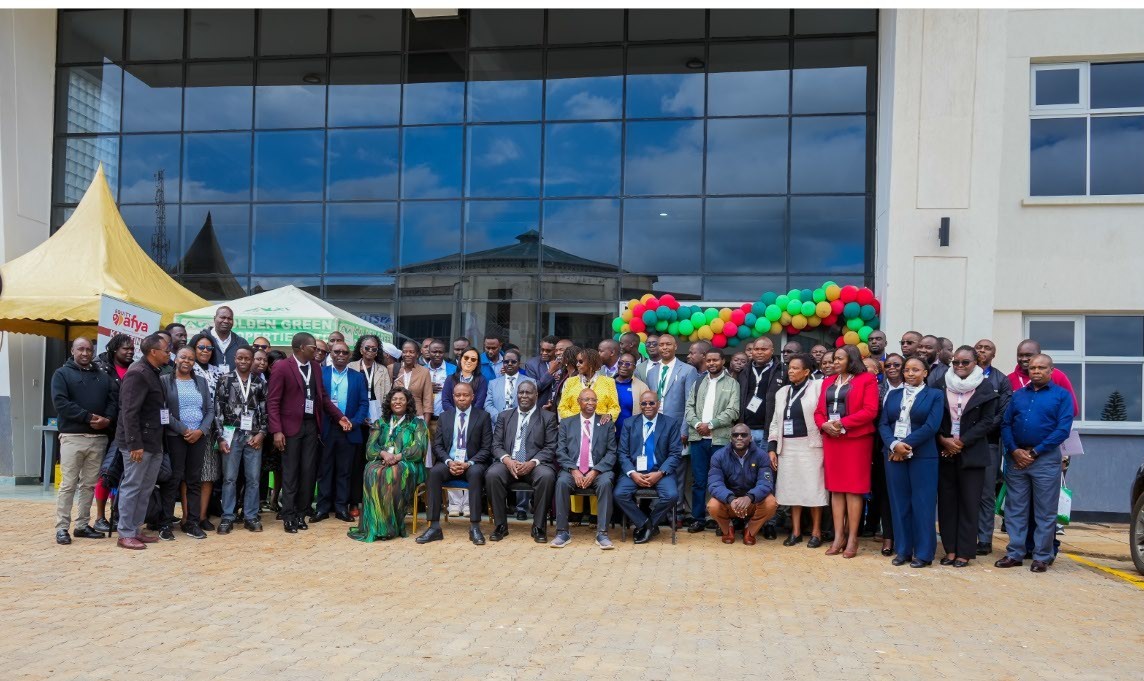
The participants pose for a group photo during the ICAHSTI Conference at the Mountain View Tuition Block